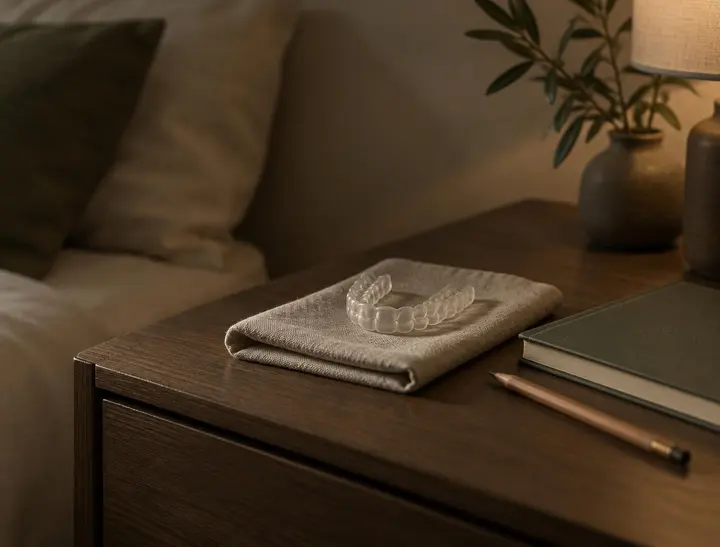
What it is, and why you might discuss it
Screening looks for reasons to investigate sleep-disordered breathing.
Snoring, grinding, a scalloped tongue, and daytime fatigue are clues, not diagnoses.
How we assess whether it suits you
- Discuss sleep quality, witnessed breathing pauses, and daytime sleepiness.
- Review health history and examine relevant oral features.
- Use screening questions to guide medical referral when indicated.
What the process involves
- 01
Review your symptoms and dental findings together.
- 02
Coordinate medical evaluation and sleep testing when appropriate.
- 03
Discuss results and medically recommended treatment options.
- 04
Assess oral appliance suitability if that pathway is appropriate.
Alternatives worth asking about
- Medical sleep evaluationA sleep clinician determines testing and appropriate treatment.
Benefits
- Connects sleep concerns with a referral pathway.
- Identifies oral factors relevant to appliance planning.
- Supports communication between dental and medical teams.
Risks
- Screening can miss a sleep disorder or raise concerns testing does not confirm.
- Relying on screening alone could delay appropriate care.
Limitations
- Dental screening cannot diagnose sleep apnea; sleep testing is required.
- An oral appliance is not suitable for everyone.
Timing
Referral and testing schedules vary. The medical team confirms diagnostic steps.
Recovery
Screening requires no recovery. Avoid driving when sleepy and seek medical advice about significant daytime sleepiness.
What affects the cost
- Scope of dental assessment.
- Separate medical testing arrangements.
- Records and review included in the screening; medical testing and later treatment are separate.
These factors explain the scope of care, not a Whole Tooth price quote. Assessment fees are separate from later treatment estimates, and the practice will publish its fees and policies before it opens.
Questions people ask
Does snoring mean sleep apnea?
Not necessarily, but it can justify further investigation.
Can a night guard treat sleep apnea?
A tooth-protection guard is not an apnea treatment.
How is an appliance checked?
Follow-up assesses dental effects; sleep testing may assess treatment effectiveness.