What it is, and why you might discuss it
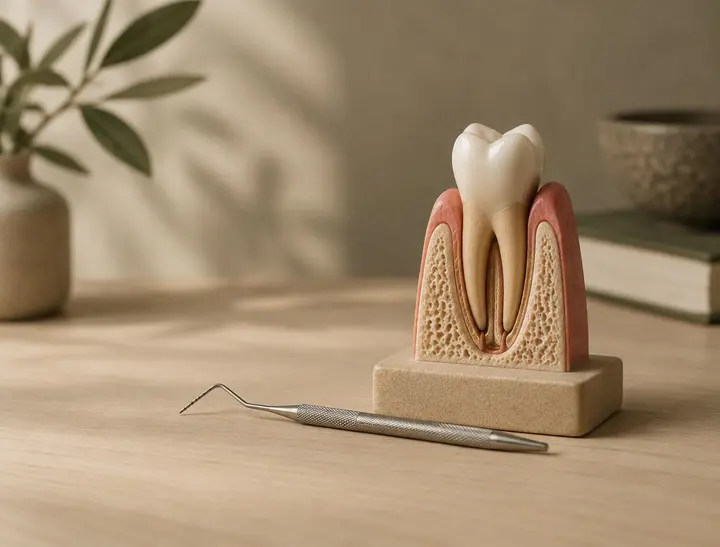
Periodontal disease affects the gums and supporting bone around teeth. It can progress without obvious pain.
Care may include scaling and root planing, which clean deposits below the gumline, localized treatment and structured maintenance.
How we assess whether it suits you
- Measure gum pockets, bleeding and recession.
- Review appropriate images of supporting bone.
- Consider smoking, diabetes and home-care challenges.
What the process involves
- 01
Review measurements and treatment priorities.
- 02
Clean affected areas, with numbing when appropriate.
- 03
Reassess healing and remaining pockets.
- 04
Set maintenance and consider referral where needed.
Alternatives worth asking about
- Specialist periodontal carePersistent or advanced disease may need specialist treatment, including surgery.
Benefits
- Reduced deposits beneath the gumline.
- Support for controlling inflammation.
- Ongoing checks for disease activity.
Risks
- Tenderness and sensitivity can follow treatment.
- Recession or spaces may become more noticeable as swelling settles.
- Further treatment may be necessary.
Limitations
- Treatment cannot guarantee tooth retention.
- Lost supporting bone does not routinely regrow after cleaning.
Timing
The number of visits depends on disease extent and healing. Your clinician confirms reassessment and maintenance intervals.
Recovery
Follow your cleaning and sensitivity instructions while tissues settle. Contact the practice about worsening pain or unexpected swelling.
What affects the cost
- Number of affected areas.
- Treatment complexity.
- Maintenance and specialist needs.
These factors explain the scope of care, not a Whole Tooth price quote. Assessment fees are separate from later treatment estimates, and the practice will publish its fees and policies before it opens.
Questions people ask
Is this just a deeper cleaning?
It treats diagnosed disease below the gumline and requires reassessment.
Will I need numbing?
That depends on treatment depth and your sensitivity.
What happens if I delay?
Disease may progress and reduce tooth support, even without pain.
References
Sources for background information; not a record of clinical approval or individualized instructions.