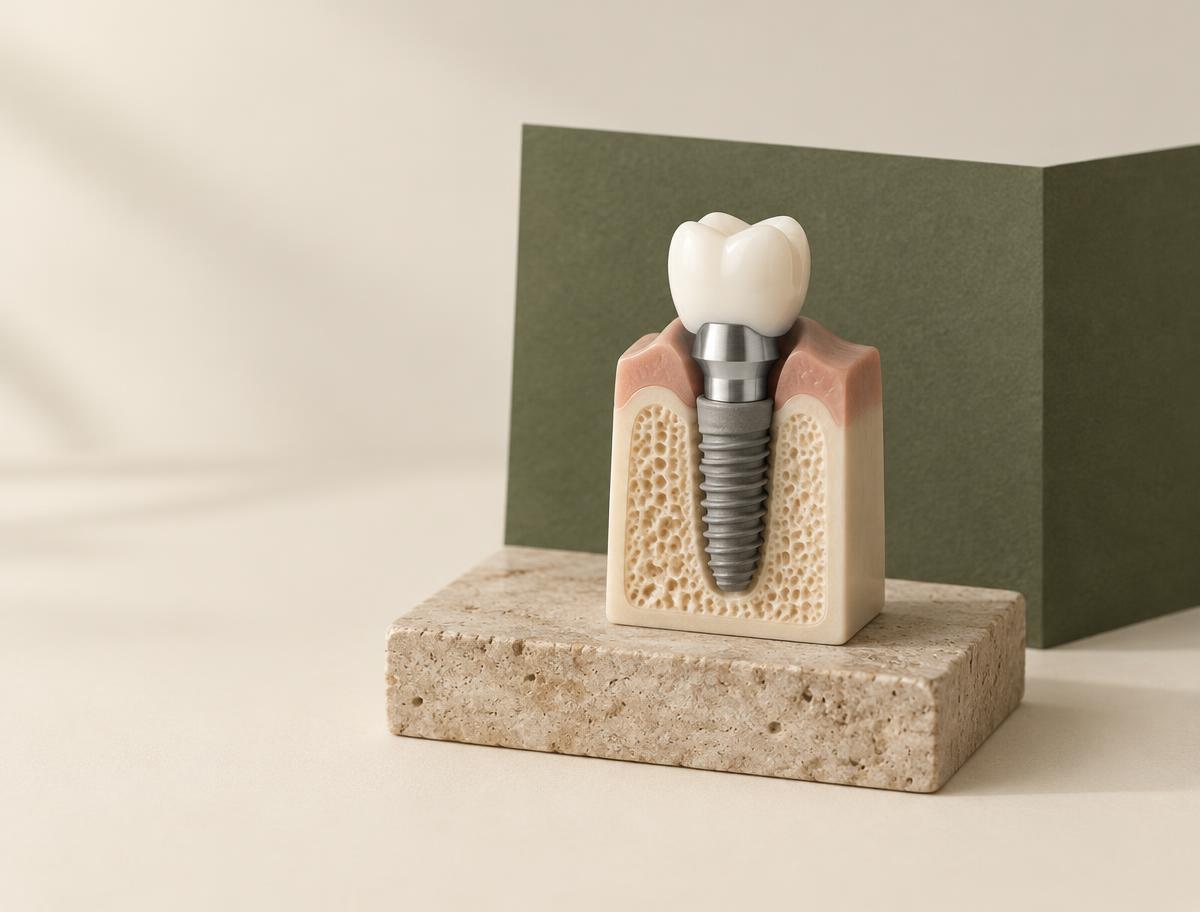
 Illustrative
Planned opening 2027. Whole Tooth Dental is not yet treating patients. These guides explain care options, not current appointment availability.
Replace Missing Teeth
Tooth replacement is easiest to think about by scale: one tooth, several teeth, or a whole arch. The options that make sense change at each level, and so does what you are committing to.
5 guides in this area
Below, each option is described in plain terms — what it involves, what it asks of you, and what it does not do. None is universally best; the right one depends on your mouth, your health and what you want to be able to eat and speak without thinking about.
Comparing the options
Three broad ways to replace missing teeth, described without a verdict. Suitability depends on bone, gums, adjacent teeth, health history and what you are willing to maintain.
- Implant-supported tooth
- A titanium post placed in the jaw carries a ceramic crown, bridge or denture attachment.Worth weighing
- Does not require changing the teeth beside the gap
- Needs sufficient bone, and may need preparation of the site first
- Treatment runs over months, with healing time between stages
- Requires ongoing cleaning and periodic review of the implant
- Bridge
- A fixed ceramic replacement anchored to the teeth either side of the gap.Worth weighing
- Usually quicker than an implant route
- The supporting teeth must be prepared
- The health of those teeth decides how long it lasts
- Not removable, and cleaned differently from natural teeth
- Removable denture or partial
- A removable appliance replacing one or more teeth, with or without implant retention.Worth weighing
- Often the least invasive starting point
- Needs daily removal and cleaning
- Fit changes as the jaw and gums continue to reshape
- Implant retention can improve stability if you choose it later