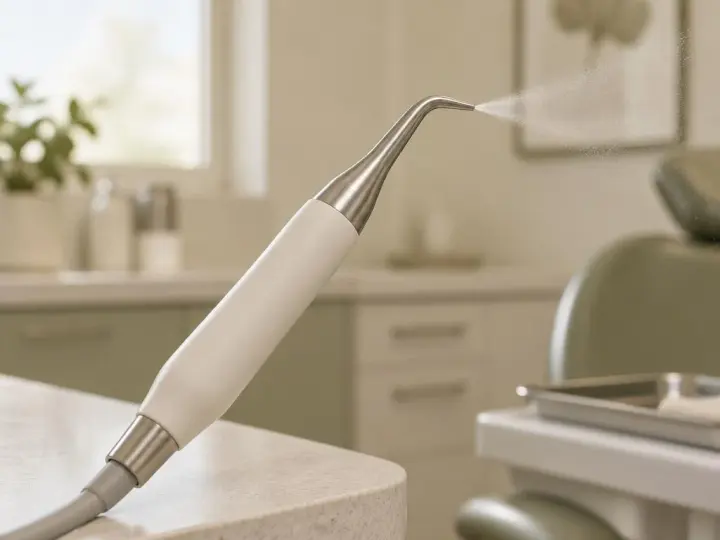
For many people, a professional cleaning means scraping, a gritty paste and a polish at the end. Air polishing offers a different approach that some patients find more comfortable.
What it is
Air polishing uses a controlled stream of water, air and a fine powder to remove plaque, biofilm and surface stain from the teeth and along the gumline. It is often paired with ultrasonic instruments, which use gentle vibration and water to loosen hardened deposits.
How it can differ
- Less scraping. Much of the biofilm can be removed without as much hand scraping.
- Gentle on many surfaces. The powders used for air polishing can be suitable around fillings, crowns and implants, depending on the material.
- Warm water options. Some systems allow warmer water, which some people with sensitive teeth find more comfortable.
Hand instruments are still useful, and your hygienist will choose what is appropriate for your mouth.
Why it matters
Plaque is a sticky film of bacteria. If it is not removed, it can harden into tartar and contribute to cavities and gum disease. Regular professional cleaning, together with brushing twice a day and cleaning between your teeth daily, is one of the most effective things you can do for your oral health.
What we plan
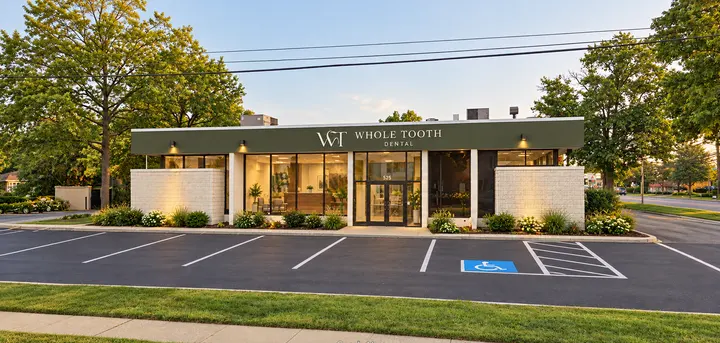
At Whole Tooth Dental, opening in Plainview in fall 2027, we plan to use ultrasonic scaling and air polishing as part of cleaning tailored to your needs. Our guide to professional hygiene explains more.
This article is general information and does not replace an examination.