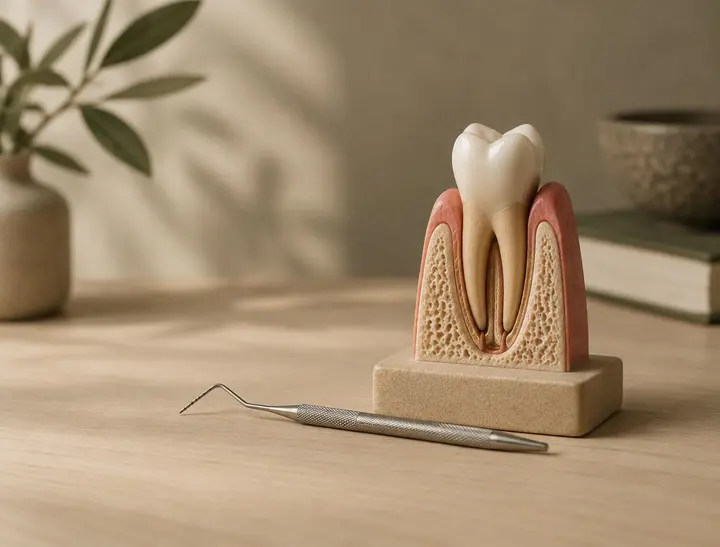
Most people think of cavities when they think of dental problems. But the gums and the bone beneath them hold your teeth in place, and gum disease is one of the most common reasons adults lose teeth.
How gum disease starts
It begins when plaque builds up along the gumline. The early stage, called gingivitis, causes inflammation that can make gums red, swollen or prone to bleeding. Gingivitis is often reversible with good home care and professional cleaning.
If it continues, it can progress to periodontitis, where the gums pull away from the teeth and the supporting bone can be lost.
Signs worth noticing
- Gums that bleed when you brush or floss
- Red, swollen or tender gums
- Persistent bad breath
- Gums that seem to be pulling back from the teeth
- Teeth that feel loose or a bite that feels different
Gum disease is often painless in its early stages, which is why regular checkups matter even when nothing hurts.
What helps
- Brushing twice a day with fluoride toothpaste
- Cleaning between your teeth every day
- Not smoking
- Regular professional cleanings and checkups
Some health conditions, such as diabetes, and some medications can affect gum health, so it helps to share your health history with your dental team.
Why gum measurements matter
During an exam, small measurements of the space between the gum and each tooth help show whether gums are healthy or whether there are signs of disease. Comparing those numbers over time shows whether things are stable.
Our guide to periodontal care explains what we plan to offer when Whole Tooth Dental opens in Plainview in fall 2027.
This article is general information and does not replace an examination.