What it is, and why you might discuss it
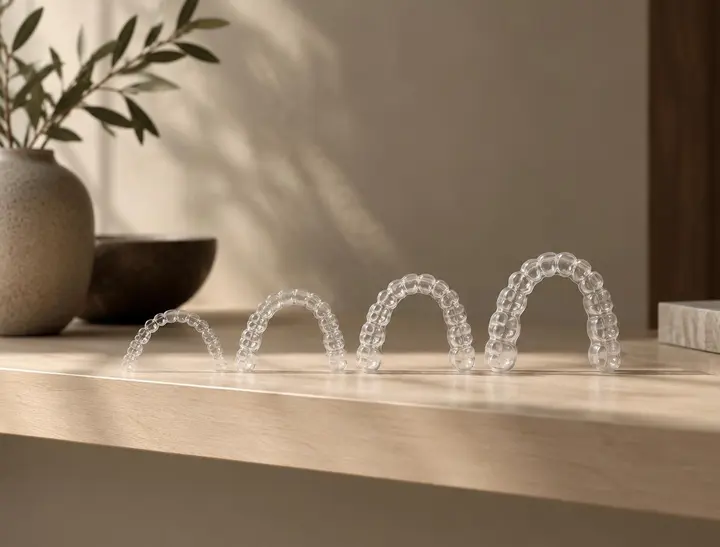
A sequence of removable trays applies controlled forces to move teeth.
Treatment may address crowding, spacing or selected bite concerns.
How we assess whether it suits you
- Examine teeth, gums and supporting bone.
- Record your bite and tooth positions with a digital scan.
- Discuss wear habits and whether the movements are suitable.
What the process involves
- 01
Review a digital projection of the proposed movement.
- 02
Fit the trays and explain prescribed wear and cleaning.
- 03
Change trays as directed and attend progress reviews.
- 04
Fit retainers and establish a retention plan.
Alternatives worth asking about
- Cosmetic bondingCan disguise some small gaps without moving teeth, but changes tooth shape.
- Fixed orthodontic treatmentMay suit movements that removable trays cannot manage well.
Benefits
- Trays come out for meals and brushing.
- Digital planning helps explain intended changes.
- Progress checks allow the plan to be reassessed.
Risks
- Pressure and mouth irritation may occur.
- Decay or gum inflammation can develop with inadequate cleaning.
- Root changes or gum recession are possible.
Limitations
- The projection is not a guaranteed result.
- Consistent wear and long-term retention are necessary.
Timing
Complexity, wear consistency and biological response affect timing. Your dentist confirms the expected course and any revisions.
Recovery
New trays may feel tight. Follow cleaning instructions and seek advice if a tray stops fitting.
What affects the cost
- Complexity of tooth movements.
- Monitoring and additional trays needed.
- Retainer requirements.
These factors explain the scope of care, not a Whole Tooth price quote. Assessment fees are separate from later treatment estimates, and the practice will publish its fees and policies before it opens.
Questions people ask
Can I eat wearing the trays?
Remove them for meals and follow instructions about drinks.
What if I miss wear time?
Contact the practice rather than skipping ahead.
Will I need retainers?
Yes. Teeth can move again without ongoing retention.
References
Sources for background information; not a record of clinical approval or individualized instructions.