What it is, and why you might discuss it
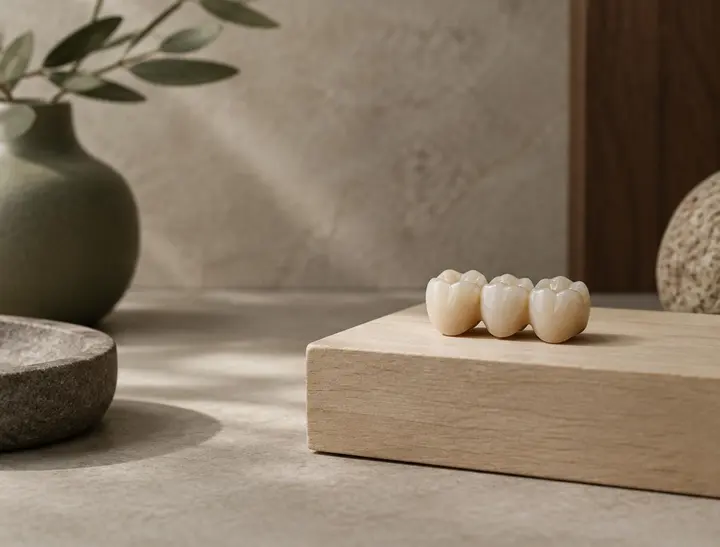
A ceramic replacement tooth is joined to restorations on either side of a gap.
You might consider it for chewing, speech, or a visible space.
How we assess whether it suits you
- Examine supporting teeth for decay, cracks, and existing restorations.
- Check gum support and relevant X-rays.
- Assess the gap, bite forces, and cleaning access.
What the process involves
- 01
Compare a bridge with implant and removable options.
- 02
Prepare supporting teeth and record their shape.
- 03
Provide a temporary restoration when needed.
- 04
Fit the bridge and check contact, appearance, and bite.
Alternatives worth asking about
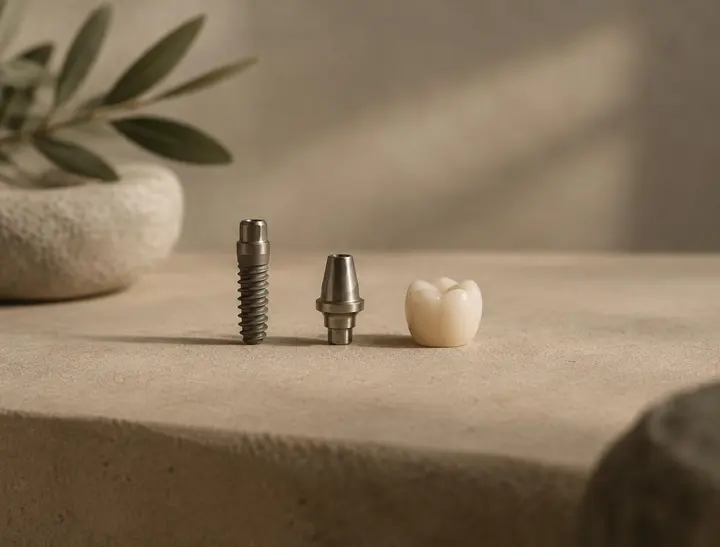
- Single tooth implantAvoids preparing adjacent teeth but involves surgery and healing.
Benefits
- Stays fixed during everyday use.
- Can improve chewing and speech affected by a gap.
- Restores continuity along your smile line.
Risks
- Prepared teeth can become sensitive or need root canal treatment.
- Decay, fracture, or loosening can affect the bridge.
Limitations
- Supporting teeth must be reshaped.
- A bridge does not replace missing tooth roots.
Timing
Laboratory work and any treatment of supporting teeth affect timing. Your dentist outlines the stages.
Recovery
Temporary sensitivity or gum tenderness can occur. Report persistent discomfort or an uneven bite.
What affects the cost
- Number of teeth involved.
- Condition of supporting teeth.
- Restoration design and laboratory work.
These factors explain the scope of care, not a Whole Tooth price quote. Assessment fees are separate from later treatment estimates, and the practice will publish its fees and policies before it opens.
Questions people ask
Does it come out?
No. A conventional bridge is fixed to its supporting teeth.
How do I clean underneath?
Your team demonstrates floss threading or suitable interdental tools.
Is an implant always better?
No. Tooth condition, bone, health, and your preferences guide the comparison.