What it is, and why you might discuss it
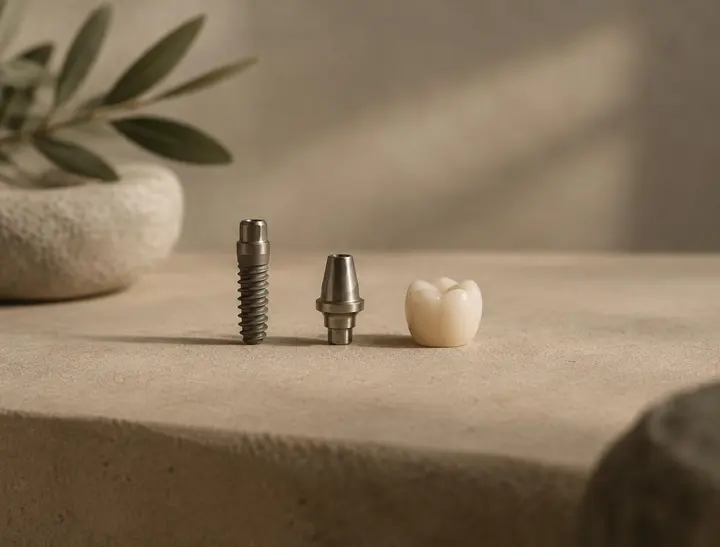
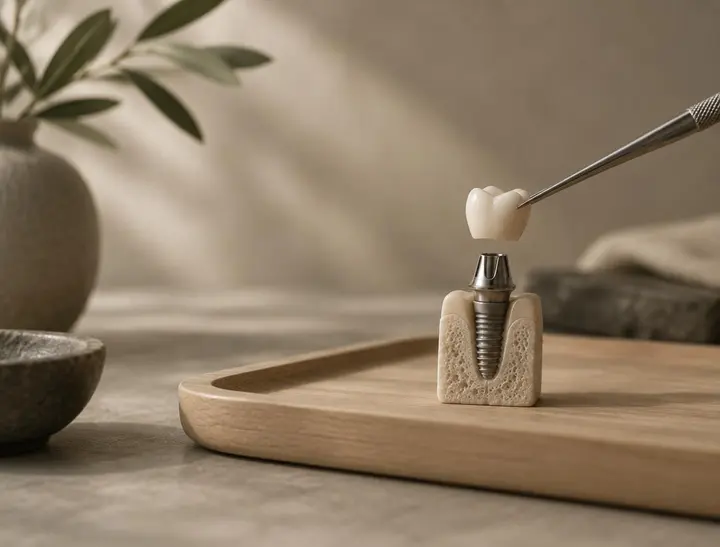
The restoration is the tooth-shaped part you see and chew with.
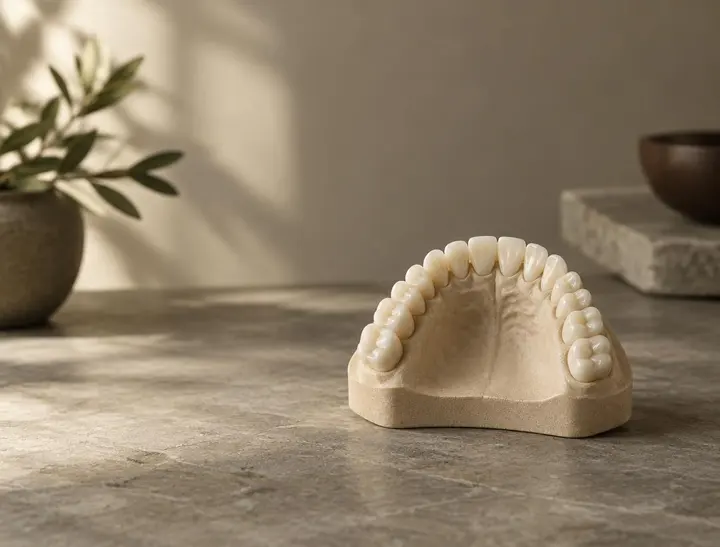
A crown replaces one tooth; a bridge can replace several.
How we assess whether it suits you
- Identify the implant system and available components.
- Check implant stability, surrounding bone, and gum health.
- Evaluate bite space, appearance, and cleaning access.
What the process involves
- 01
Gather implant records and digital scans.
- 02
Design the gumline contour, shade, and biting surfaces.
- 03
Fit the restoration and verify its connection and bite.
- 04
Review cleaning and maintenance needs.
Alternatives worth asking about
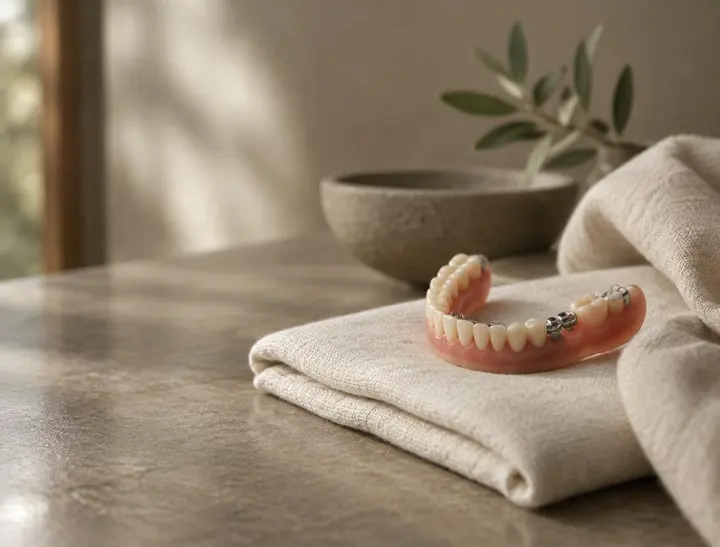
- Implant-retained dentureA removable option when implant positions and treatment goals allow.
Benefits
- Provides a usable chewing surface.
- Allows individualized tooth shape and shade.
- May update older work without replacing a healthy implant.
Risks
- Ceramic can chip and screws or other connections can loosen.
- Inflammation around an implant can threaten its support.
Limitations
- Not every older implant has compatible replacement parts.
- A new crown cannot correct an unhealthy or poorly positioned implant.
Timing
Component identification, tissue readiness, and laboratory stages determine timing. Your clinician confirms the plan.
Recovery
Fitting usually focuses on bite and gum comfort. Contact the practice if the restoration moves or feels high.
What affects the cost
- Number of teeth restored.
- Component availability and design.
- Condition of existing implants.
These factors explain the scope of care, not a Whole Tooth price quote. Assessment fees are separate from later treatment estimates, and the practice will publish its fees and policies before it opens.
Questions people ask
Can you replace my older implant crown?
Possibly, after checking the implant, connection, and component availability.
Why does the gumline shape matter?
It influences appearance and access for cleaning.
What if my crown feels loose?
Arrange an assessment rather than continuing to chew on it.