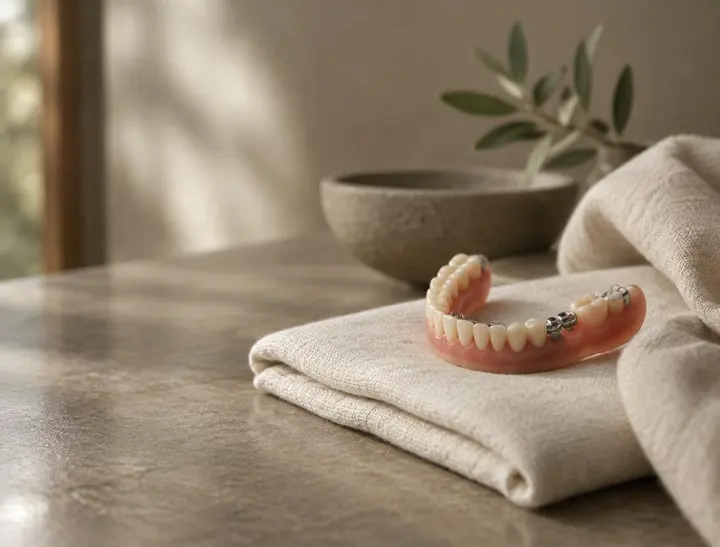
What it is, and why you might discuss it
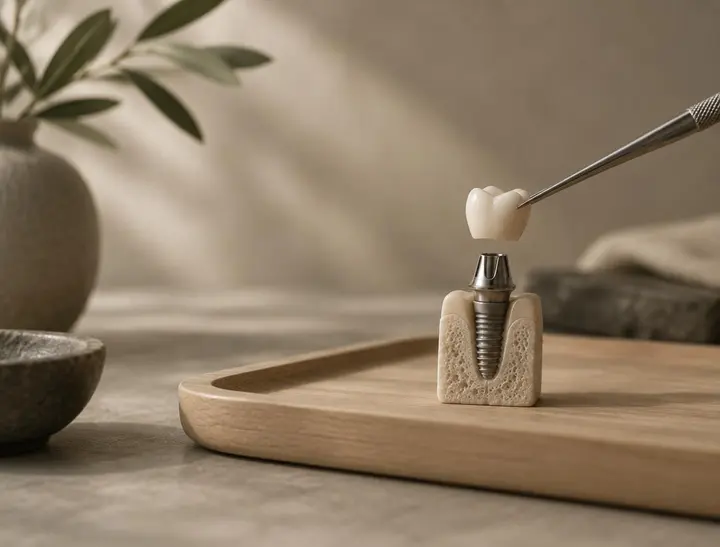
Two or more implants anchor attachments that a denture snaps onto.
An existing denture can often be adapted if its condition and fit allow.
How we assess whether it suits you
- Assess bone, gums, and medical factors affecting surgery.
- Review denture fit, tooth position, and bite.
- Check space for attachments and your ability to clean them.
What the process involves
- 01
Plan implant positions alongside the denture design.
- 02
Place implants and monitor healing.
- 03
Adapt or make the denture and connect its attachments.
- 04
Teach removal, cleaning, and attachment care.
Alternatives worth asking about
- Full-arch implant therapyA fixed option requiring different support and cleaning arrangements.
- Conventional dentureAvoids implant surgery but may offer less retention.
Benefits
- Helps reduce denture movement.
- Allows removal for direct cleaning access.
- May retain a suitable existing denture.
Risks
- Implant surgery carries infection and healing risks.
- Attachment inserts wear and dentures can fracture.
Limitations
- Daily removal and cleaning remain essential.
- Some designs still rest partly on the gums.
Timing
Implant healing and denture adaptation shape the schedule. Your dentist explains when attachment loading is appropriate.
Recovery
Surgical tenderness may affect denture use. Follow guidance about wearing the denture during healing.
What affects the cost
- Implant number and preparation.
- New denture versus adaptation.
- Attachment selection and maintenance.
These factors explain the scope of care, not a Whole Tooth price quote. Assessment fees are separate from later treatment estimates, and the practice will publish its fees and policies before it opens.
Questions people ask
Will I still remove it?
Yes, for daily cleaning and as your clinician advises.
Can my current denture work?
Its fit, strength, and available space need checking first.
Do attachments need replacing?
Retentive parts can wear and require maintenance.