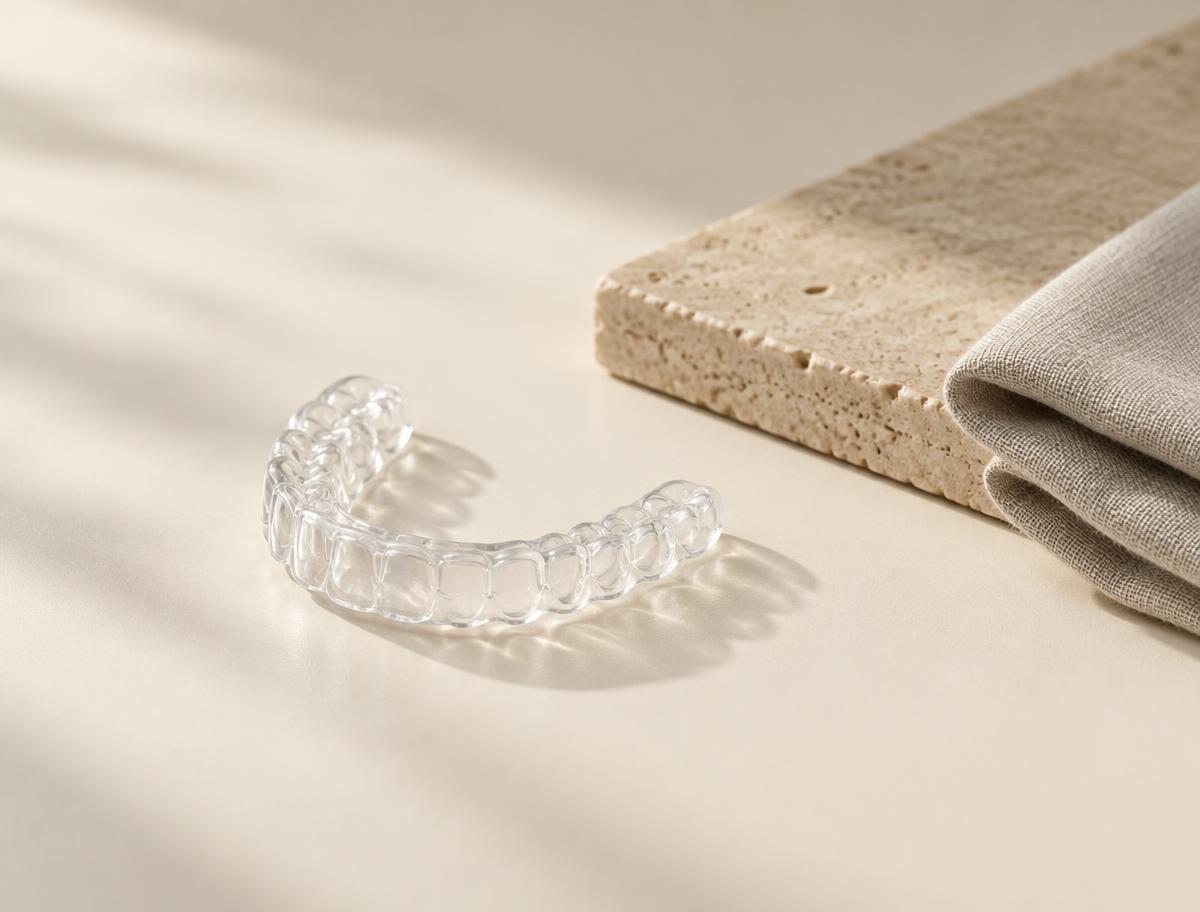
 Illustrative
Home Sleep Study Screening
Planned opening 2027. We are not yet treating patients. These guides are educational; availability and treatment details require confirmation.
A simple overnight test worn in your own bed, used as a screening to support referral and coordinated care with your physician.
A medical clinician may recommend a home sleep apnea test for an appropriate patient. The recording helps evaluate sleep-related breathing and requires clinical interpretation. Whole Tooth’s testing and interpreting-clinician arrangements require confirmation.
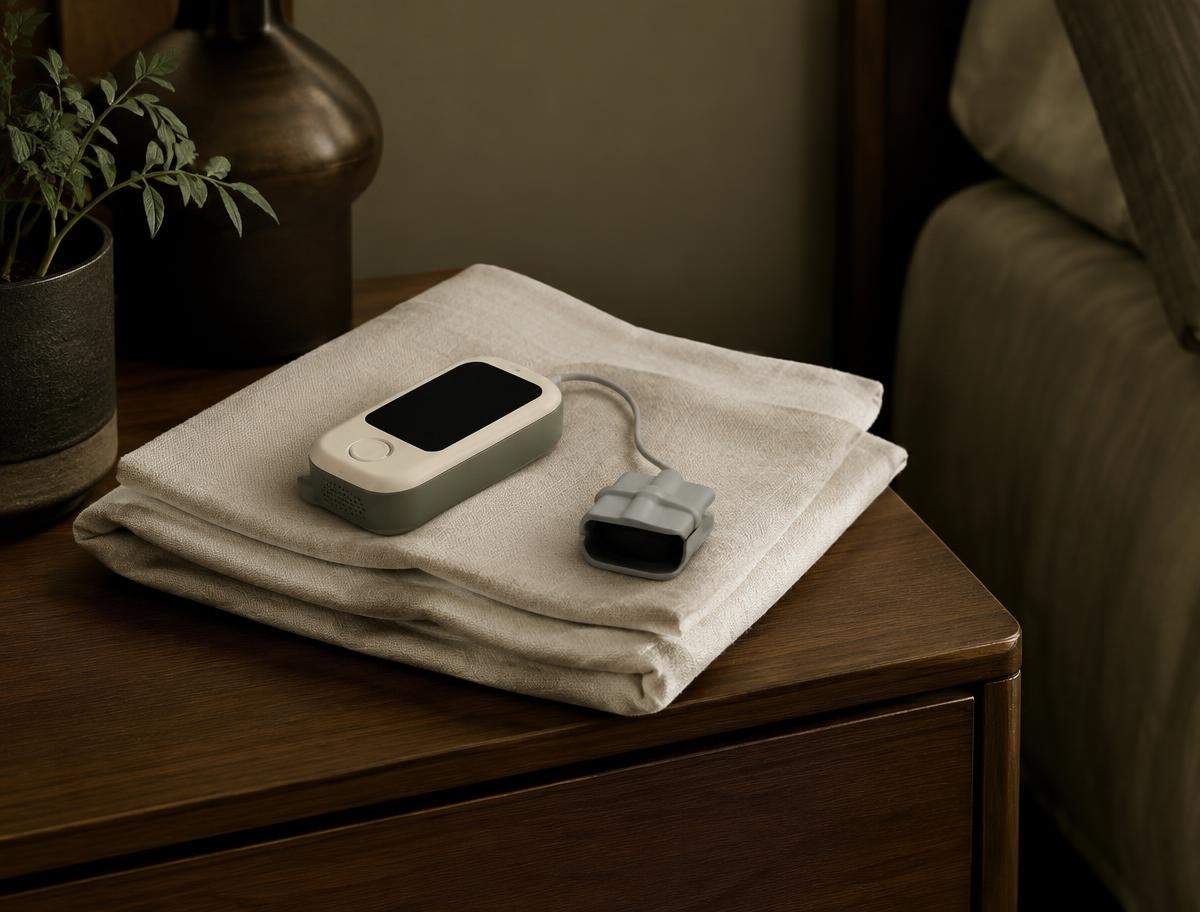 Illustrative
What it is, and why you might discuss it
- A home sleep apnea test records breathing, airflow, oxygen level, heart rate and effort to breathe through a small device with a finger sensor and soft nasal tube.
- This guide explains home sleep apnea testing generally. Whole Tooth’s testing arrangements and availability are not confirmed; a medical clinician determines whether a home test is appropriate.
- Diagnosis is always made by a physician. Where needed, they may order an in-lab study for a fuller picture.
- The treating medical or sleep clinician explains the results and appropriate next steps; Whole Tooth’s coordination arrangements are unconfirmed.
How we assess whether it suits you
- A sleep questionnaire and examination of the mouth, jaw and airway.
- A review of your health history; some conditions call for an in-lab study instead of a home test.
- Consent to share results with your primary care or sleep physician.
What the process involves
- 01The prescribing team provides device-specific setup and written instructions.
- 02You sleep at home as usual for one or two nights, then return the device.
- 03The recording is interpreted by a sleep physician and a report is produced.
- 04The treating sleep team discusses results and follow-up.
Alternatives worth asking about
- Sleep apnea treatment options
What happens after the test, and how the dental and medical options compare.
- In-lab sleep study
Arranged by your physician when a fuller study is needed.
Benefits
- Done in your own bed, without an overnight stay in a lab.
- Objective data that speeds up referral and diagnosis.
- Keeps your dentist and physician working from the same results.
Risks
- Minimal — mild skin irritation from sensors is occasionally reported.
- A home test can underestimate apnea; a normal result with ongoing symptoms should be discussed with your physician.
Limitations
- A screening and data-gathering tool; diagnosis is made by a physician.
- Not suitable for everyone — some medical conditions need an in-lab study.
Timing
Pick-up and set-up take a short visit; recording runs one or two nights.
Recovery
None.
What affects the cost
These factors explain the scope of care, not a Whole Tooth price quote. Assessment fees are separate from later treatment estimates. Whole Tooth’s fees and disclosure policy require confirmation; ask about applicable assessment charges before arranging a visit.
- Type of prescribed test and recording duration.
- Device use, clinical interpretation and results consultation included in the test.
- Whether an incomplete recording needs repeat testing; subsequent treatment is separate.
Questions people ask
References
Sources for background information; not a record of clinical approval or individualized instructions.
Related guides
- Read the guide
Sleep Apnea & Snoring
Where dentistry fits in sleep-disordered breathing — screening, referral, and two dental treatment options once a diagnosis exists.
- Read the guide
Mandibular Advancement Devices
A custom oral appliance that holds the lower jaw forward during sleep. Learn who may benefit, what treatment involves and why follow-up matters.
- Read the guide
Myofunctional Therapy
Guided exercises and habit training for selected oral movement and resting patterns. Assessment determines whether therapy is appropriate.
- Read the guide
Airway & Sleep Screening
Review oral findings and sleep symptoms that may warrant medical sleep testing, without treating a dental screening as a diagnosis.