 Illustrative
Sleep Apnea & Snoring
Planned opening 2027. We are not yet treating patients. These guides are educational; availability and treatment details require confirmation.
Where dentistry fits in sleep-disordered breathing — screening, referral, and two dental treatment options once a diagnosis exists.
Obstructive sleep apnea means the airway repeatedly narrows or closes during sleep, interrupting breathing and rest. It is common, often unrecognized, and linked with daytime fatigue, high blood pressure and heart strain. A sleep clinician assesses diagnosis and treatment. Whole Tooth’s sleep services and referral arrangements have not been confirmed.
 Illustrative
What it is, and why you might discuss it
- During sleep the muscles of the throat and tongue relax. In obstructive sleep apnea the soft tissue falls back far enough to block airflow, the oxygen level drops, and the brain briefly wakes the body to restart breathing — sometimes dozens of times an hour, usually without the person remembering.
- Loud snoring, pauses in breathing that a partner notices, gasping, morning headaches, a dry mouth, waking unrefreshed and heavy daytime sleepiness are the typical signs. In the mouth, worn teeth from grinding, a scalloped tongue and a crowded throat can point the same way.
- Snoring on its own is not always apnea, and apnea does not always involve snoring. Only a sleep study — at home or in a lab — measures what actually happens, and only a physician can diagnose it.
- Treatment decisions belong with the treating sleep clinician. Oral appliances may be options for selected adults; myofunctional exercise evidence is limited and exercises are not an automatic replacement for prescribed treatment.
How we assess whether it suits you
- A screening conversation and questionnaire about sleep, snoring, daytime tiredness and health history, alongside an examination of the teeth, jaw, tongue and throat.
- If anything suggests sleep-disordered breathing, we refer you to a sleep physician for testing rather than guessing at a diagnosis.
- If you already have a diagnosis, we review the sleep report — the severity matters, because it determines which dental options are reasonable.
- The teeth, gums and jaw joints are checked to make sure they can support an appliance before one is suggested.
What the process involves
- 01Assessment by an appropriate dental or medical clinician.
- 02Referral for a home or lab sleep study and a physician's diagnosis, if you don't have one.
- 03A shared decision on treatment: CPAP, a mandibular advancement device, myofunctional therapy, or a combination.
- 04Follow-up testing to confirm the treatment is working, with records shared with your physician.
Alternatives worth asking about
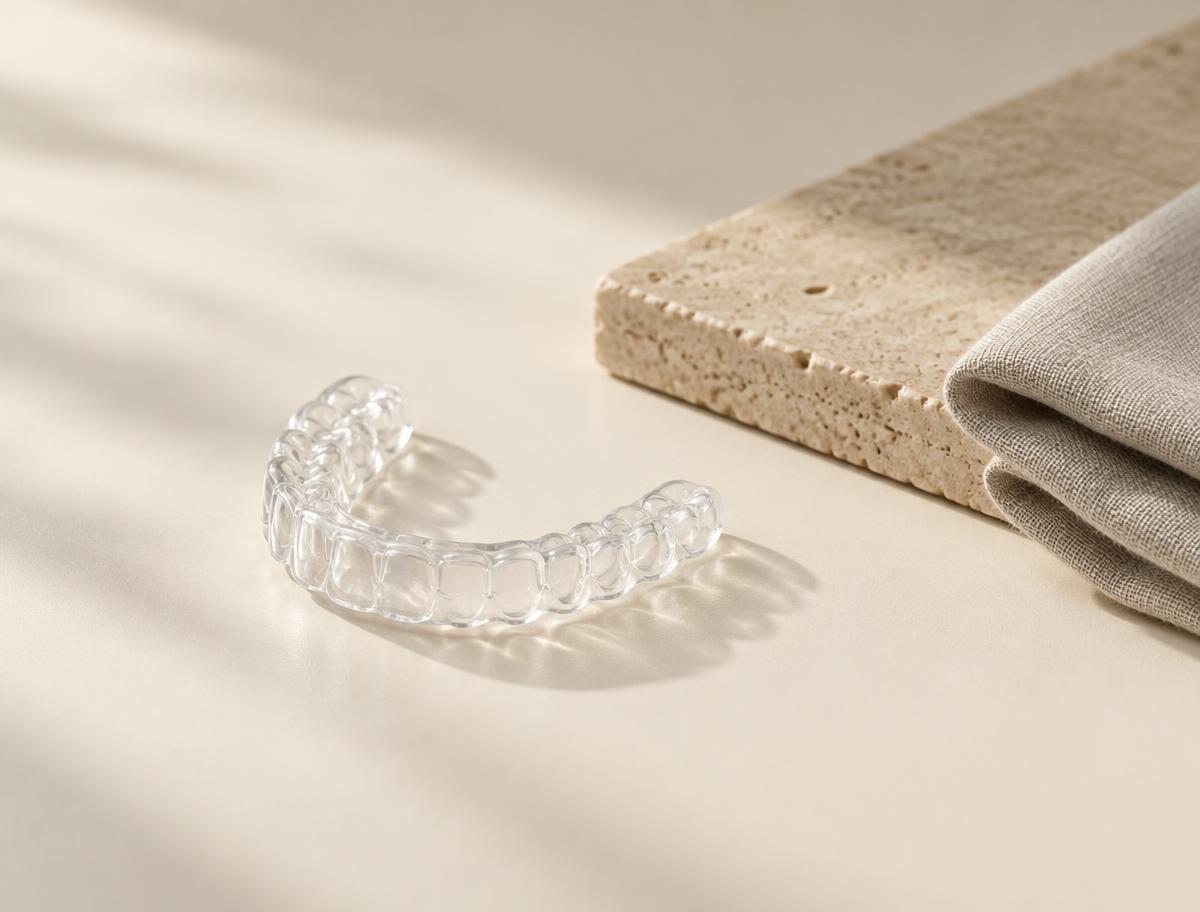
- Mandibular advancement device (MAD)
A custom oral appliance that holds the lower jaw forward during sleep; assessment and follow-up determine suitability and effectiveness.
- Myofunctional therapy, coaching & training
Guided exercises and habit training for selected oral movement and resting patterns; evidence for sleep outcomes is limited.
- CPAP through your sleep physician
The standard first-line treatment for moderate to severe apnea; a dental option can help if CPAP is not tolerated.
Benefits
- Recognizing sleep apnea allows appropriate assessment and treatment planning. Benefits depend on the individual and the treatment used.
- Better sleep usually means more energy, concentration and mood during the day.
- Dental options are quiet, portable and need no electricity — easier for many people to use every night.
- Care is coordinated with your physician, so everyone works from the same results.
Risks
- Untreated sleep apnea carries real health risks; snoring treatment that masks it without a diagnosis can delay proper care.
- Each treatment has its own side effects, explained on its own page.
Limitations
- A dentist cannot diagnose sleep apnea — that requires a sleep study and a physician.
- Dental treatment is generally best suited to snoring and mild to moderate apnea, or to people who cannot use CPAP.
- Results are confirmed by follow-up testing, not by how you feel alone.
Timing
Screening fits into a regular visit. Testing and diagnosis depend on your sleep physician; treatment begins once a diagnosis is in hand.
Recovery
There is no recovery period for screening. Adjustment to an appliance or a training program usually takes a few weeks.
What affects the cost
These factors explain the scope of care, not a Whole Tooth price quote. Assessment fees are separate from later treatment estimates. Whole Tooth’s fees and disclosure policy require confirmation; ask about applicable assessment charges before arranging a visit.
- Scope of the assessment and medical diagnostic evaluation.
- Testing and any subsequent treatment are separate steps with their own estimates.
Questions people ask
Related guides
- Read the guide
Mandibular Advancement Devices
A custom oral appliance that holds the lower jaw forward during sleep. Learn who may benefit, what treatment involves and why follow-up matters.
- Read the guide
Myofunctional Therapy
Guided exercises and habit training for selected oral movement and resting patterns. Assessment determines whether therapy is appropriate.
- Read the guide
Airway & Sleep Screening
Review oral findings and sleep symptoms that may warrant medical sleep testing, without treating a dental screening as a diagnosis.
- Read the guide
Night Guards
Protect teeth from nighttime grinding with a custom-fitted guard, supported by bite adjustments and ongoing checks for wear.