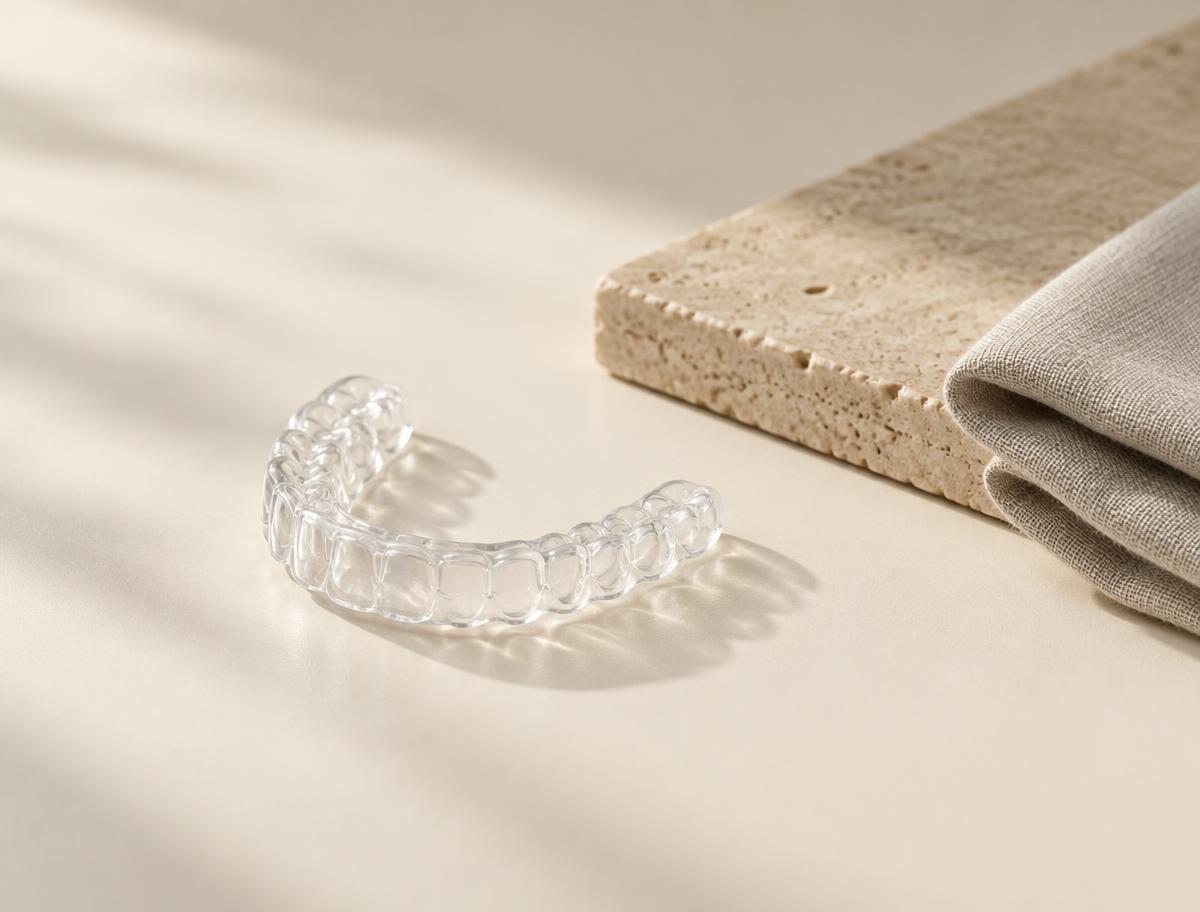
 Illustrative
Night Guards
Planned opening 2027. We are not yet treating patients. These guides are educational; availability and treatment details require confirmation.
Protect teeth from nighttime grinding with a custom-fitted guard, supported by bite adjustments and ongoing checks for wear.
At Whole Tooth Dental, a night guard is planned around your teeth, bite, and symptoms rather than a generic shape.
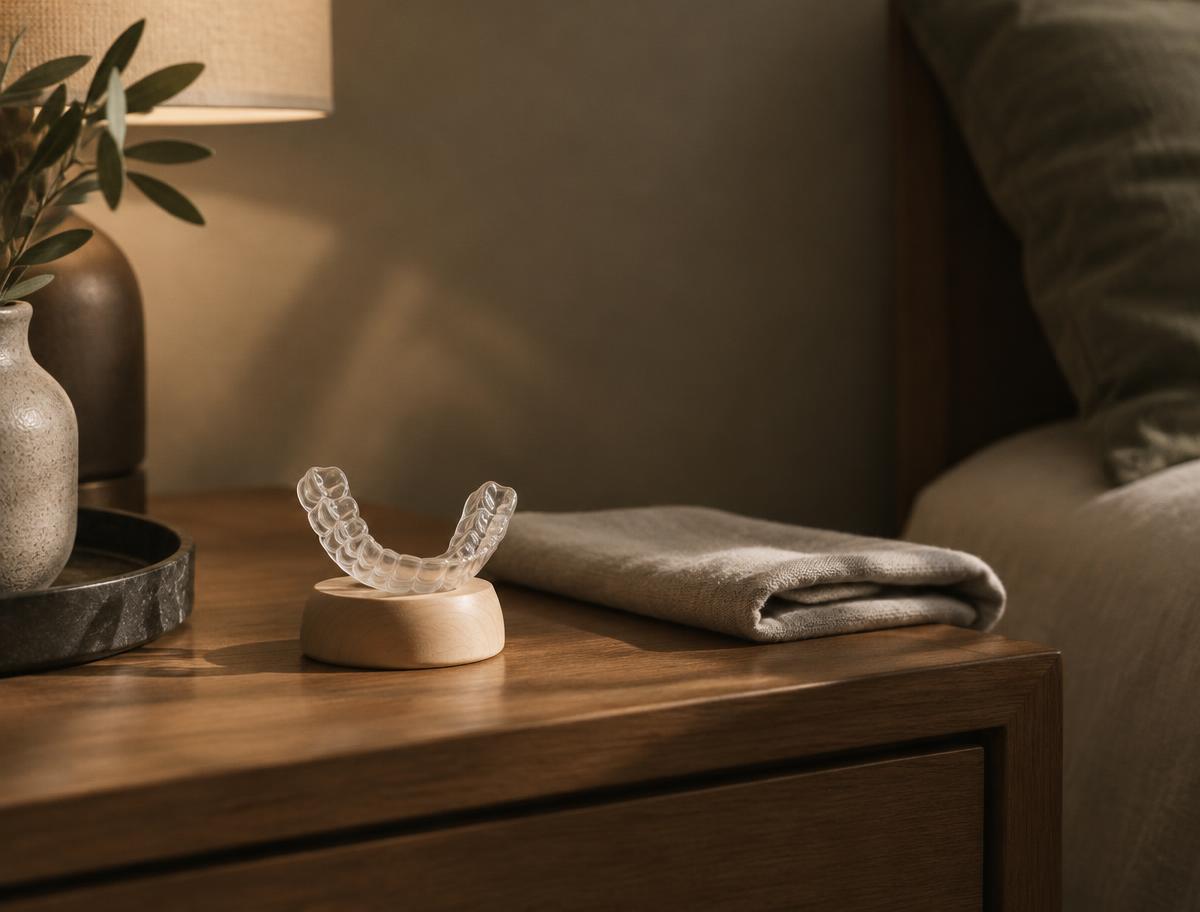 Illustrative
What it is, and why you might discuss it
- Clenching and grinding can wear enamel, crack teeth, and strain jaw muscles.
- A custom guard cushions tooth contact without claiming to stop the underlying habit.
How we assess whether it suits you
- Check wear, cracks, restorations, and gum health.
- Assess jaw symptoms and how your teeth meet.
- Review sleep symptoms that may warrant separate investigation.
What the process involves
- 01Capture a digital scan of your teeth.
- 02Design a guard for stable retention and appropriate coverage.
- 03Adjust fit and tooth contacts, then demonstrate cleaning.
- 04Review comfort, wear, and bite changes over time.
Alternatives worth asking about
- TMJ and occlusal evaluation
Useful when pain, locking, or changing function needs investigation.
Benefits
- Creates a protective barrier between teeth.
- Offers a thinner, more tailored fit than many store-bought guards.
- Allows professional adjustment for stability and comfort.
Risks
- Initial saliva changes or discomfort can occur.
- Poor fit or unmonitored wear may affect tooth contacts.
Limitations
- A guard does not reliably stop grinding.
- It does not treat sleep apnea or guarantee jaw pain relief.
Timing
Fabrication and adjustment needs determine the schedule. Your dentist confirms when to begin wearing it.
Recovery
No surgical recovery is involved. Arrange review for persistent soreness or a changed bite.
What affects the cost
These factors explain the scope of care, not a Whole Tooth price quote. Assessment fees are separate from later treatment estimates. Whole Tooth’s fees and disclosure policy require confirmation; ask about applicable assessment charges before arranging a visit.
- Guard material and design.
- Complexity of bite adjustment.
- Repair or replacement needs.
Questions people ask
References
Sources for background information; not a record of clinical approval or individualized instructions.
Related guides
- Read the guide
TMJ & Occlusal Evaluation
Explore how your jaw joints, muscles, and bite work together when clicking, soreness, headaches, or tooth wear need assessment.
- Read the guide
Airway & Sleep Screening
Review oral findings and sleep symptoms that may warrant medical sleep testing, without treating a dental screening as a diagnosis.
- Read the guide
Broken or Chipped Tooth
Protect a chipped or broken tooth first, then assess the damage and choose a repair that suits the remaining tooth and your bite.