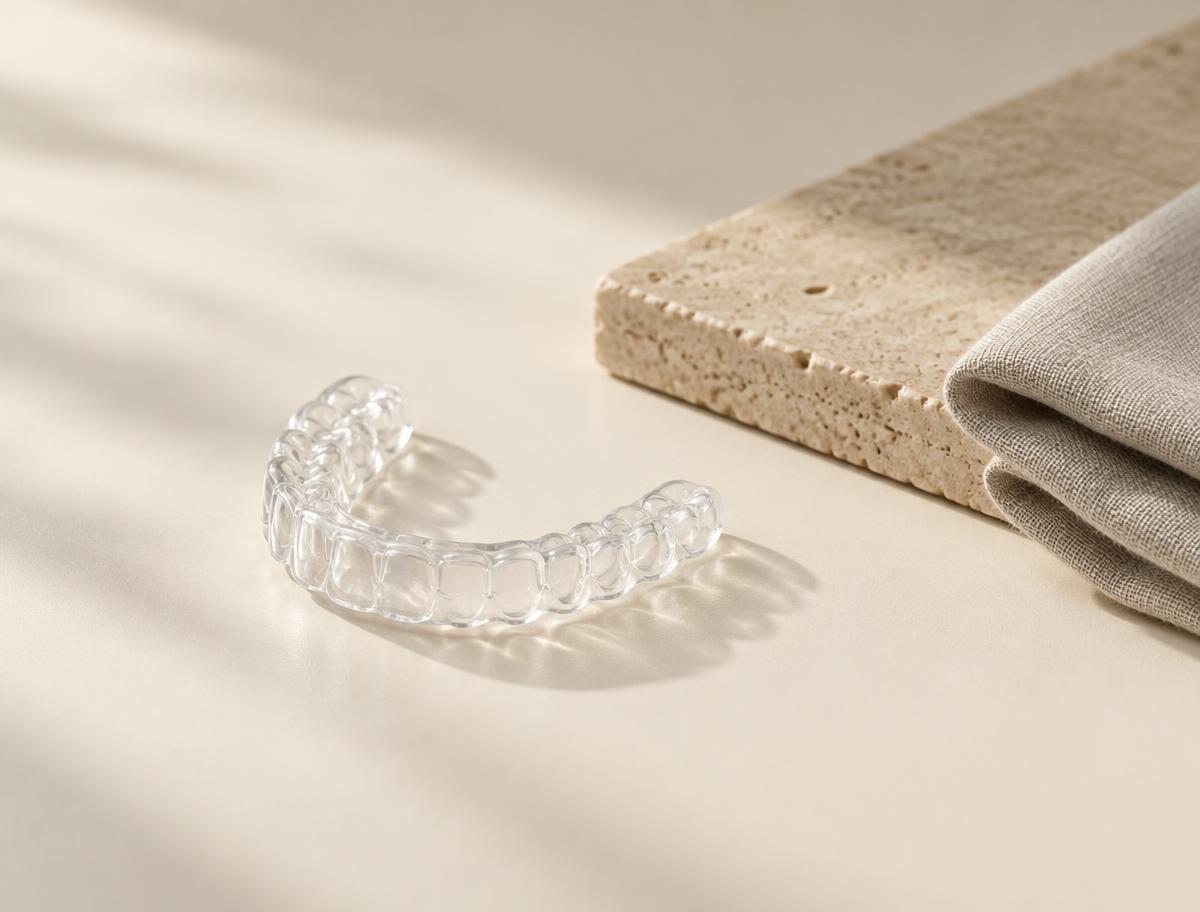
 Illustrative
TMJ & Jaw Muscle Massage
Planned opening 2027. We are not yet treating patients. These guides are educational; availability and treatment details require confirmation.
Hands-on treatment for the jaw muscles that tighten from clenching, grinding and everyday tension.
A great deal of jaw pain is not the joint at all — it is the muscles that move it. Massage to those muscles can ease soreness, let the jaw open further, and make the rest of a plan work better.
 Illustrative
What it is, and why you might discuss it
- The masseter, temporalis and pterygoid muscles lift and guide the jaw. When they stay clenched — from grinding at night, daytime clenching, posture or stress — they become tender, tight and easily tired.
- Treatment is manual. External massage and sustained pressure are applied along the jaw, cheeks and temples; where it helps, the muscles inside the cheek are released gently with a gloved finger.
- It is most useful as part of a plan: paired with a night guard, habit and posture work, and a few daily exercises, so the relief does not last only a day.
- It is not a treatment for the joint itself. A displaced disc or an arthritic joint is a different problem, and massage is one supportive part of the plan for it rather than the plan.
How we assess whether it suits you
- The causes that massage should not be used for are ruled out first: an acutely inflamed or infected joint, a recent injury, or pain that is actually coming from a tooth.
- Opening is measured, tenderness is mapped across the muscles, and the teeth are checked for the wear patterns that show where force is going.
- If the joint itself is displaced or arthritic, the plan changes — massage supports it, but does not correct it.
- Where the driver is sleep-related grinding or a breathing problem, that is assessed alongside, because treating the muscles alone will not hold.
What the process involves
- 01A short examination of the jaw, neck and posture, with a check of the teeth for wear and a note of what makes things worse.
- 02A warm compress, then manual massage and sustained pressure into the outer jaw, cheek and temple muscles.
- 03If appropriate, gentle intraoral release of the muscles inside the cheek.
- 04A small set of daily stretches and habit changes you can do yourself, so the session is not a one-off.
Alternatives worth asking about
- A night guard
Protects the teeth from grinding and takes some load off the muscles overnight.
- A jaw assessment first
The right starting point if you have not been examined — it tells us whether the muscles are the problem.
- Staged restorative work
Where the bite has collapsed and the muscles are coping with the consequences.
Benefits
- Non-invasive, with no medication and no equipment inside the mouth.
- Can reduce muscle soreness, tension and the headaches that come with clenching.
- May improve how far the jaw can open and make chewing more comfortable.
- The techniques can be taught, so you can maintain the relief yourself.
- Sits alongside a night guard or other treatment rather than replacing it.
Risks
- The muscles can feel sore for a day afterward, similar to after unaccustomed exercise.
- Relief is often temporary if the clenching habit itself is not addressed.
- Not appropriate while a joint is acutely inflamed or infected, or after a recent injury.
- Occasional light-headedness or a brief ache in the jaw joint can occur with sustained pressure.
Limitations
- It does not reposition a displaced joint disc or regrow joint tissue.
- It will not straighten a bite or change the shape of the teeth.
- Results vary — some people notice a clear difference, others much less.
- It is not a substitute for the assessment that decides what is actually causing the pain.
Timing
Sessions run about 30 to 45 minutes. How many you need depends on what the examination shows, and is discussed rather than fixed in advance.
Recovery
You can carry on with the day straight afterward. Mild muscle soreness for up to a day is normal.
What affects the cost
These factors explain the scope of care, not a Whole Tooth price quote. Assessment fees are separate from later treatment estimates. Whole Tooth’s fees and disclosure policy require confirmation; ask about applicable assessment charges before arranging a visit.
- Scope of the jaw-muscle assessment.
- Number and length of manual-therapy sessions and reviews.
Questions people ask
References
Sources for background information; not a record of clinical approval or individualized instructions.
Related guides
- Read the guide
TMJ & Occlusal Evaluation
Explore how your jaw joints, muscles, and bite work together when clicking, soreness, headaches, or tooth wear need assessment.
- Read the guide
Night Guards
Protect teeth from nighttime grinding with a custom-fitted guard, supported by bite adjustments and ongoing checks for wear.
- Read the guide
Airway & Sleep Screening
Review oral findings and sleep symptoms that may warrant medical sleep testing, without treating a dental screening as a diagnosis.
- Read the guide
Comprehensive Exam
Understand your teeth, gums, bite and jaw health through a thorough examination, clear records and a conversation about priorities.